
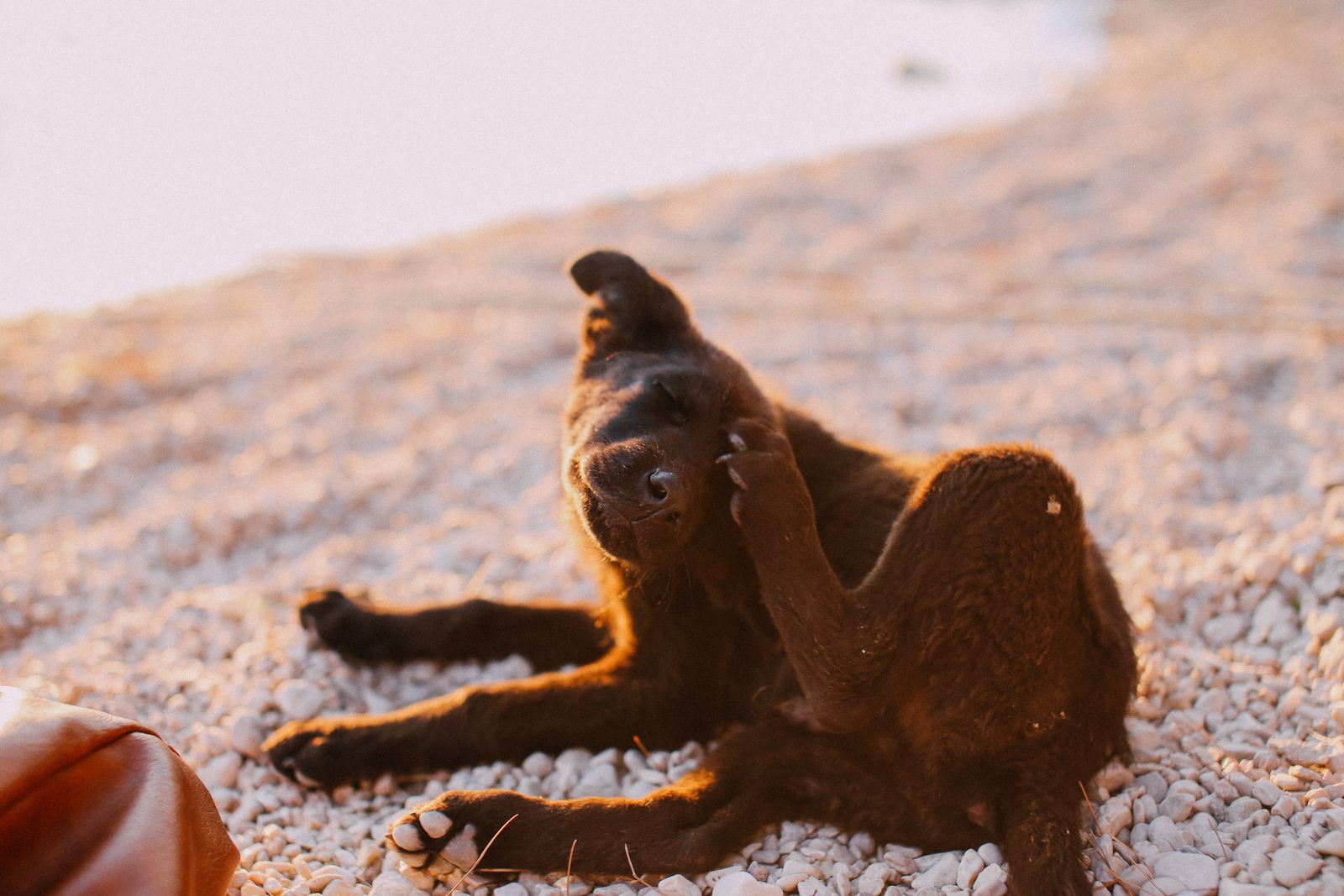
Dogs with environmental allergies usually itch rather than sneeze. Pollens, grasses, dust mites, mold, and flea bites can trigger paw licking, face rubbing, red irritated skin, and recurring ear trouble. In Daly City’s mild coastal climate, many allergens linger most of the year. A veterinarian can narrow down the cause and build a long-term itch management plan.
Allergies look different in dogs than in people
When people think of allergies, they picture sneezing, watery eyes, and a runny nose. Dogs are wired differently. In dogs, allergic reactions tend to show up in the skin, so instead of reaching for tissues, an allergic dog scratches, licks, chews, and rubs. You might notice your dog gnawing at their paws after a walk, dragging their face along the carpet or couch, or scratching at their ears and belly far more than usual.
Other common signs include red or pink irritated skin, especially on the paws, belly, armpits, and around the ears, along with recurring ear infections, a greasy or unusual odor to the coat, and thinning fur in spots your dog licks constantly. Because these signs build slowly, many owners assume itching is just a quirk. Persistent scratching is not normal, and it is usually your first clue that something in your dog’s environment is bothering them.
Common allergy triggers around Daly City
Environmental allergies in dogs are reactions to everyday substances that most dogs shrug off. Around Daly City and the northern Peninsula, the usual suspects include tree and weed pollens, grasses your dog walks through and rolls in, dust mites that live in bedding and carpets, and mold, which thrives in our damp coastal air and in cool, humid corners of the home.
Flea bites deserve special mention. Even a dog with only mild environmental allergies can become intensely itchy after a few flea bites, because flea saliva is one of the most common allergy triggers in dogs. In a mild climate like ours, fleas stay active essentially year-round, so a lapse in prevention during the winter months can quietly undo months of progress on an itchy dog’s skin.
Why coastal fog means allergy season rarely ends
In colder parts of the country, a hard winter freeze knocks down pollen, kills off fleas, and gives allergic dogs a natural break. Daly City’s coastal fog belt works differently. Our temperatures stay mild through the year, so grasses and many plants keep growing, pollens circulate across more months, and fleas never really get shut down by the weather.
The persistent moisture that comes with coastal fog also favors mold and mildew, both outdoors and inside homes from Westlake to the rest of the northern Peninsula. Dust mites likewise do well in humid conditions. The practical result is that many local dogs itch in every season rather than just in spring, and owners often cannot connect the itching to any single time of year. That year-round pattern is itself a useful clue for your veterinary team.
The itch-scratch cycle and secondary skin problems
Allergic itching tends to feed on itself. The allergen makes the skin itch, the dog scratches and chews for relief, and the scratching damages the skin barrier, which makes the skin even more inflamed and itchy. Veterinarians call this the itch-scratch cycle, and once it is rolling it rarely stops on its own.
Broken, inflamed skin is also an open door for the yeast and bacteria that normally live quietly on a dog’s coat. These secondary skin and ear infections add their own layer of itch and odor on top of the original allergy, which is why a dog who started with mild seasonal itching can end up with raw, smelly, crusty patches or ears that flare up again and again. Treating the infection helps, but lasting comfort usually means addressing the allergy underneath as well.
What you can do at home to reduce the itch
Simple habits can meaningfully lower your dog’s allergen load. Rinsing or wiping your dog’s paws and belly with plain water after walks removes pollen and grass residue before your dog licks it off or carries it to bed. Washing your dog’s bedding regularly in hot water cuts down dust mites, and vacuuming the areas where your dog sleeps helps too. Keeping damp areas of the home well ventilated makes life harder for mold.
Year-round flea prevention for every pet in the household is one of the highest-value steps an owner can take, since it removes a major itch amplifier from the picture. Regular bathing and coat care also help many allergic dogs, and our medical grooming team can care for irritated skin gently and flag changes that deserve a closer look. What home care cannot do is resolve an established allergy on its own, so think of these steps as a foundation rather than a cure.
How your veterinarian builds an itch management plan
Because many different problems can make a dog itch, your veterinarian starts by ruling things in and out. A thorough skin and ear exam, a careful history of when and where the itching happens, and strict flea control come first. From there, our medical services team may recommend pet diagnostics such as skin sampling to check for infection or a food trial to separate food-related itching from environmental triggers.
Once environmental allergies are the likely culprit, the goal shifts to long-term comfort rather than a one-time fix. Your veterinarian can combine skin barrier support, infection control, itch relief suited to your dog, and a household routine you can actually sustain, then adjust the plan at regular rechecks. Folding those visits into your dog’s wellness program keeps small flare-ups from turning into big setbacks and keeps costs and stress more predictable over time.
Frequently asked questions
Why is my dog itchy but not sneezing?
Because dogs mostly express allergies through their skin rather than their nose. The same airborne pollens that make a person sneeze tend to make a dog lick paws, rub their face, scratch, and develop red skin or ear trouble instead.
Can fleas really make environmental allergies worse?
Yes. Flea saliva is a major allergy trigger, and even a few bites can push an already allergic dog into intense itching. Consistent year-round flea prevention for every pet in the home is a core part of any itch management plan.
Will my dog’s allergies go away on their own?
Usually not. Environmental allergies tend to be a lifelong tendency that is managed rather than cured, and in a mild coastal climate the triggers rarely disappear for long. The good news is that with a steady plan most allergic dogs live comfortable, itch-controlled lives.
Does rinsing my dog’s paws after walks actually help?
Yes, it genuinely helps many dogs. A quick rinse or wipe with plain water removes pollen and grass residue from the paws and belly, which reduces both skin contact and the amount your dog swallows while licking.
When should I bring my itchy dog to the veterinarian?
Book a visit if the itching lasts more than a week or two, disrupts sleep or play, or comes with red or broken skin, hair loss, head shaking, or repeated ear problems. Earlier exams make it easier to break the itch-scratch cycle before secondary infections set in.