
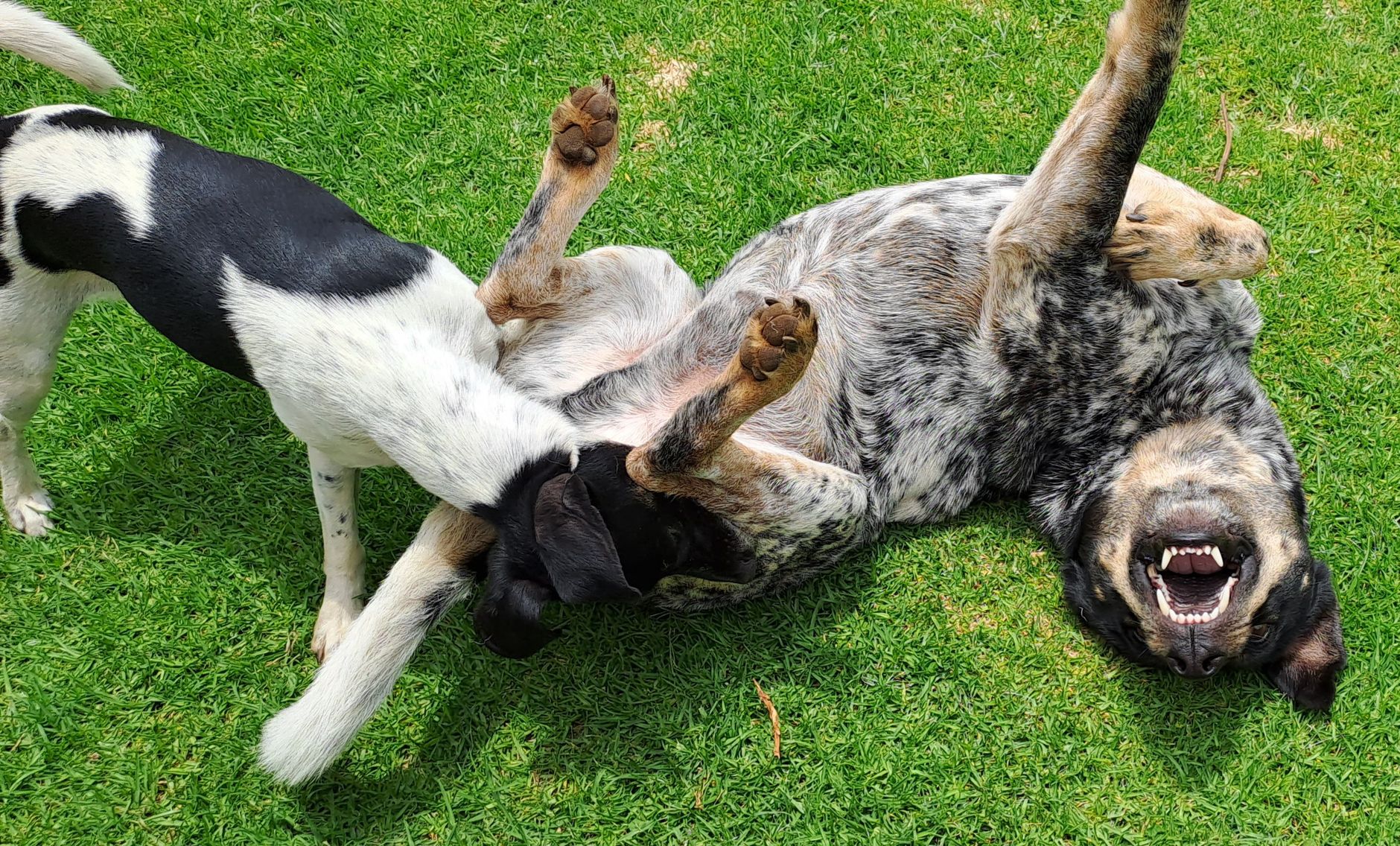
Shorter days mean shorter walks and less to look at, and a pet with nothing to do finds a job. Most of what gets labeled misbehavior at this time of year is an animal solving boredom. The useful distinction is that boredom builds slowly and improves when you add activity, while a problem that needs seeing does neither.
What actually changes for a pet as the light goes
It is easy to assume the issue is temperature. Here it rarely is. What changes is daylight and weather: the evening walk disappears into the dark, and unlike the famous summer fog, what shortens the morning one now is rain. A dog who had two decent outings has one brief one.
For cats the change is subtler and larger. A cat who spent the summer watching an open window, patrolling a yard or sitting on a warm step now has a closed house, and cats sleep a great deal more when there is nothing happening. A cat sleeping twenty hours a day is not necessarily content; they may simply have run out of things to do.
The behaviors that follow are predictable once you see them as a shortage rather than a fault.
What boredom looks like
In dogs: chewing things that are not toys, particularly furniture legs and baseboards; raiding bins and counters; digging at carpet; barking at every sound outside; following you from room to room and demanding attention; restlessness in the evening, pacing or an inability to settle; and getting rapidly over-excited at the smallest trigger.
In cats: waking you at 4 AM; sprinting around the house at night; over-grooming to the point of thin patches; scratching furniture when a post is available; knocking objects off surfaces deliberately; play that has turned into biting hands and ankles; and eating out of boredom, which is where the seasonal weight comes from.
One pattern worth naming: a pet who is destructive only when left alone, and who starts showing signs as you prepare to leave, is more likely to be anxious than bored. Those two need different approaches, and adding a puzzle feeder does not solve the second one.
What works for dogs
The central idea is that sniffing and problem-solving tire a dog far more efficiently than distance does, which is useful when a long walk is not available.
- Feed from something other than a bowl. A puzzle feeder, a snuffle mat, or the daily ration scattered across a towel. A dog who works for food spends twenty minutes on what took ninety seconds.
- Hide and seek with food. Shut your dog out of a room, place small amounts of the day’s ration in five or six spots, then let them in to find it. Most dogs find this genuinely absorbing and it costs nothing.
- Teach something new, in five-minute sessions. Learning is tiring in a way repetition is not. A new trick, a name for a specific toy, going to a mat on cue.
- Let the walk be a sniffing walk. A short route where your dog chooses the pace and gets to investigate beats a brisk march around the same block. This is one of the easiest changes to make, and one of the most resisted.
- Rotate the toys. Keep two-thirds put away and swap weekly. The same toy reappearing after two weeks is a new toy.
- Use the stairs and the hallway for short bursts of recall and retrieve on wet days.
- Chewing is a need, not a vice. Provide something appropriate and durable rather than trying to suppress it, and supervise anything that can be broken into swallowable pieces.
- Count the food. Everything used for training comes out of the daily ration, not on top of it, or you solve boredom and create a weight problem.
What works for cats
Cats need the hunting sequence, not just movement: stalk, chase, pounce, catch, bite. A laser pointer gives the first three and never the last two, which is why some cats get more frustrated rather than more settled.
- Two short play sessions a day, five to ten minutes each, with a wand toy moved like prey rather than waved. Let it hide, pause, twitch. End by letting your cat catch it, and follow with a meal if you can, because hunt-then-eat is the natural order.
- Go vertical. Cats use height to feel secure and to get exercise. A tall post, a cleared shelf, a cat tree by a window. For an older or stiff cat, add steps so the height stays reachable.
- Give them a window with something happening. A bird feeder in view, positioned where your cat can watch but not reach, is among the most reliable entertainment there is.
- Split the food into several small portions around the house, or use a puzzle feeder, so eating involves searching.
- Rotate and refresh. Paper bags, cardboard boxes, a rolled-up towel with food inside. Novelty matters more than expense.
- Scratching: give them what the furniture provides. Sturdy, tall enough to stretch out on, and placed where they actually want to scratch rather than where it looks tidy. Add a horizontal scratcher too, since some cats prefer that.
- Never use hands as toys. A kitten who learns that hands are prey becomes a cat who ambushes ankles.
- In a multi-cat home, count the resources. Separate feeding spots, more than one litter box, and enough high places that nobody has to compete.
The part that matters most: when it is not boredom
This is where enrichment advice usually stops, and it is where the useful information is. Several things that look like seasonal behavior are not.
- A cat waking you at night can be boredom. In a cat over about ten it can also be an overactive thyroid, high blood pressure, or cognitive change. A senior cat who has newly started yowling at night should be seen rather than played with.
- Over-grooming to thin patches is not boredom in most cats. It is usually itch or pain: fleas, an allergy, or a sore hip or bladder being groomed over.
- A dog who has become restless and cannot settle in the evening can be under-exercised, and can also be in pain. Pacing, repeated position changes and difficulty lying down are all worth an examination in an older dog.
- New destructiveness in an adult dog who was previously settled is a change, and changes have reasons. Separation anxiety, pain, hearing or vision loss, and cognitive change in a senior all present this way.
- Eating things that are not food, persistently, is worth investigating rather than managing.
- House soiling, in either species, is a medical question first. A cat who starts going outside the box needs a urine sample before anyone discusses litter preferences.
The practical test: genuine boredom responds to added activity within a week or two. If you have increased the stimulation properly and nothing has shifted, or if the behavior appeared suddenly in an adult or senior pet, that is the point to come in rather than to buy another toy.
Come in through our pet emergency and urgent care if your pet has swallowed part of a toy, is straining to urinate, or has become suddenly distressed. Our pet diagnostics team runs the bloodwork and urine testing that separate a behavior change from a thyroid, kidney or pain problem, which is the question worth answering before anyone redesigns the household. Our medical services team manages what follows, and our nutrition counseling team is worth involving if enrichment is going to involve food, so the calories come out of the ration rather than being added to it.
We are open every day from 8:00 AM to 7:00 PM, which covers most of the day seven days a week. The window to plan around is overnight, between 7 PM and 8 AM. Most of what is in this article is unhurried. What does not wait is a pet who has swallowed something, a cat straining in the litter box and producing little or nothing, or a pet in obvious distress. A male cat straining to urinate is an emergency within hours, not days: if that happens overnight, go to an open emergency veterinary hospital and call ahead before you leave.
Our guide to getting earthquake ready with dogs and cats is the other household job worth doing in the same sitting, and one thing earns its place twice: a carrier left out with a blanket in it stops being a vet-trip object and becomes both enrichment and readiness.
Questions we are asked
How much enrichment does a dog actually need?
Less than the internet suggests and more than most dogs get. Two short feeding or problem-solving activities a day, one sniffing walk where your dog sets the pace, and a five-minute training session will transform most bored dogs. It is consistency rather than volume: fifteen minutes daily beats two hours on Sunday. Puppies, working breeds and adolescents need more, and older dogs often need mental work in place of physical rather than nothing at all.
My cat sleeps all day. Is that normal or is she bored?
Cats genuinely do sleep a great deal, so sleep alone is not the signal. What tells you is what happens when she is awake: a content cat has bursts of activity, grooms normally, plays if invited, and uses height. A bored cat is awake at night, demanding, over-grooming or picking fights with the furniture. Try two short wand-toy sessions a day for two weeks and see what changes. If nothing does, or if she is over ten and this is new, come in.
Is a laser pointer bad for cats?
Not harmful, but incomplete, and for some cats actively frustrating. The hunting sequence ends in a catch, and a laser never lets them have one, so some cats become more wound up rather than satisfied. If you use one, finish by landing the dot on a physical toy or a scattered portion of food so there is something real at the end. Never shine it in anyone’s eyes.
My dog chews the furniture when we are out. Is that boredom?
Possibly, and the pattern tells you. If it happens whether or not you are home and eases when you add activity, that is boredom. If it only happens when he is alone, if it starts within the first half hour, if it is focused on doors and windows, or if he is pacing and panting as you get ready to leave, that points at separation anxiety, which does not improve with more toys and can get worse if it is handled as a discipline problem. Come and talk to us about that one rather than working through it alone.
Does a second pet fix boredom?
Sometimes, and it is a large and permanent solution to a small and temporary problem, so it is worth trying everything else first. Two pets can be excellent company or can simply be two bored animals plus a new source of tension, particularly with cats, where introductions go wrong easily. If you want a second pet for its own sake, that is a different and better reason.
How do I stop my cat waking me at 4 AM?
First rule out a reason, especially if she is over ten or this is new, because an overactive thyroid and cognitive change both present exactly this way. If she is healthy, the approach is a good play session followed by her last meal as late in the evening as you can manage, so she hunts and eats and then sleeps. Then be completely consistent about not responding, because intermittent attention is the most reinforcing kind there is. It usually takes a couple of weeks and it gets worse before it gets better.
Which toys are safe to leave with an unsupervised pet?
Solid, too large to swallow, with no small detachable parts, no string or ribbon, and no squeaker that can be extracted. Anything being chewed into pieces comes away. Soft toys, rope toys, nets and anything with a cord are supervised items rather than left-alone items, because a swallowed fragment is the usual reason unsupervised play goes wrong. Check the toy box monthly and retire what is coming apart. And if you can ever see thread or ribbon at your cat’s mouth or under the tail, do not pull on it: come in the same day.
Speak to the team at Daly City Pet Hospital
If your pet’s behavior has changed suddenly, has not improved after a couple of weeks of added activity, or involves over-grooming or house soiling, call us and book a visit. Outside our hours, go to an open emergency veterinary hospital and call ahead before you leave.
Published by the team at Daly City Pet Hospital.
This article is educational in nature and is not a replacement for hands-on assessment of your own pet by a veterinarian.
Daly City Pet Hospital
170 Skyline Plaza, Daly City, CA 94015
Phone: (415) 859-5676
Hours: Every day 8:00 AM to 7:00 PM