
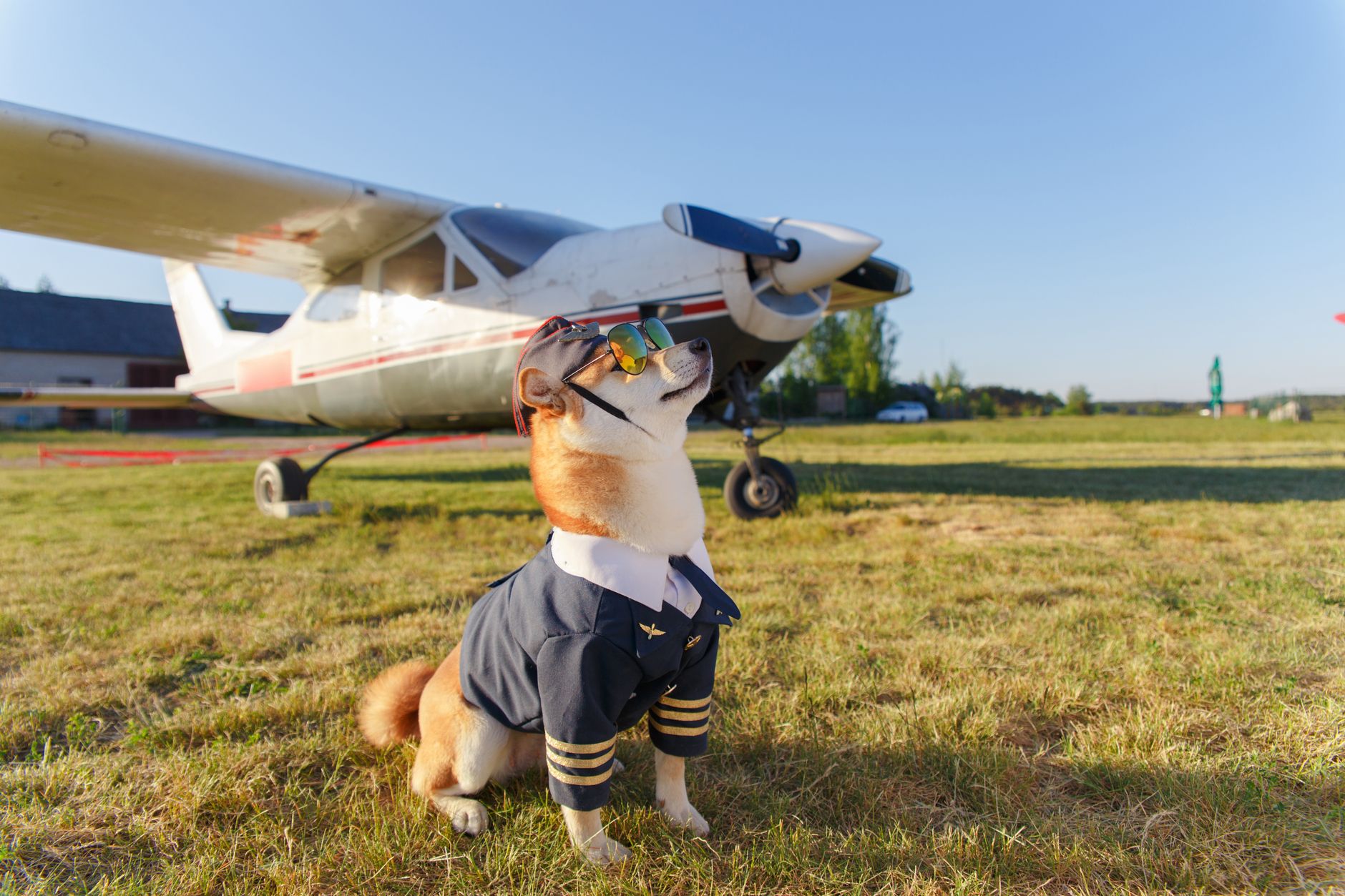
Living this close to the airport makes holiday travel look easy. For a pet it is the part of the trip with the most rules and the least flexibility. The problems we solve in December are nearly always timing: paperwork that expired, a carrier rejected, a breed never allowed in the hold. Almost all of it is avoidable six weeks out.
Start with the airline, not the vet
This is the order that saves people money. Every airline sets its own rules, and they differ more than you would expect: what counts as an acceptable carrier, whether your pet can travel in the cabin, how many animals are allowed per flight, what paperwork they want and how recently it must be dated.
So the first call is to the airline, and the questions are specific. Can my pet travel in the cabin on this route? What are the exact carrier dimensions? What documents do you require, and dated within how many days of departure? Are there breed or temperature restrictions on this route at this time of year? Is there a limit on animals per cabin, and is there space on my flight?
That last one trips people up. Cabin spots are capped and they fill, so a booked seat does not mean a booked pet.
The paperwork has a clock on it
For domestic travel, airlines typically want a health certificate issued by a veterinarian within a set window before departure — commonly ten days, though it varies. That window is the whole reason this is a timing problem: too early and it expires before you fly, too late and you cannot get an appointment.
Book the examination to land inside the window and not before. Bring the airline’s own requirements with you, because we complete the document to their specification rather than a general one, and bring your pet’s vaccination history.
International travel is a different undertaking entirely and it is measured in months, not weeks. Destination countries set their own requirements, which can include a microchip implanted before certain vaccinations, blood testing with a waiting period afterwards, and federal endorsement of the paperwork. Hawaii has its own strict rules even though it is a domestic flight. If you are leaving the country or flying to Hawaii, talk to us as early as you possibly can — a trip planned in November for December is already tight, and for some destinations it is not achievable.
Our pet travel services cover the examination and the certification, and starting that conversation early is the single most useful thing in this article. A wellness visit is also a sensible precursor for an older pet, because the point of the examination is partly to establish that flying is reasonable for this animal at all. If anything turns up on the way, our medical services pick it up.
Which pets should not fly in the hold
Some restrictions are the airline’s and some are ours, and they overlap.
Flat-faced breeds are the clearest case. Pugs, bulldogs, French bulldogs, boxers and Persian cats already breathe with less margin than other animals, and heat, stress and reduced air movement make that worse. Many airlines refuse to carry them in cargo at all, and where they are permitted the risk is still higher than for other breeds. If you have a snub-nosed pet, consider cabin travel or not flying as the two realistic options.
Beyond that, be cautious with very young animals, very old ones, pets with heart or airway conditions, and any animal who is genuinely panicked by confinement. Airlines also apply temperature embargoes, refusing hold travel when it is forecast too hot or too cold at the origin, at any connection, or at the destination.
Practical things that help on the day
- Get the carrier out weeks ahead and leave it open in a room your pet uses, with familiar bedding in it. A carrier that only appears before a flight is a frightening object.
- Check it meets the airline’s spec. The general standard is that the animal can stand, turn around and lie down naturally. Measure rather than assume.
- Label it with your name, phone number and destination, and attach a photo of your pet.
- Confirm the microchip is registered to a current phone number. People move and forget this, and the chip is only as good as the record behind it.
- Feed a light meal several hours before rather than right before, and offer water up to departure.
- Choose direct flights where you can. Connections are where animals get delayed on tarmacs.
- Do not ask for anything to make your pet sleep for the flight. This is the one firm no. At altitude, anything that dulls breathing and temperature control works against an animal who already cannot regulate well in a hold, and veterinary guidance is against it. If your pet cannot cope without it, that is an argument against flying them rather than for giving them something.
Our hours
We are open every day, Monday through Sunday, from 8:00 am to 7:00 pm, and a licensed veterinarian is on the premises whenever we are open. Being open weekends makes the certificate window considerably easier to hit.
Travel paperwork is a booked appointment, and please book it rather than walking in, because the documents take time to complete properly. If your pet becomes unwell before a trip — vomiting, coughing, off food, struggling to breathe — that needs to be looked at on its own merits before anyone signs anything. If we are closed, go to Ocean Avenue Veterinary Hospital, a 24-hour facility at 1001 Ocean Avenue in San Francisco, reachable at (415) 586-5327.
Common questions
How far ahead should I book the appointment?
Call us as soon as the flight is booked so we can work backwards from the airline’s window together. For international travel, call before you book.
My pet flew last year. Can I reuse the paperwork?
No. These documents are dated and short-lived by design, and an expired certificate is the most common reason a pet is turned away at check-in.
Is the cabin always better than the hold?
For small animals, generally yes, because they stay with you and in a stable environment. For larger dogs the hold is the only option — where the airline offers one at all, because several major carriers no longer carry pets in the hold for general passengers. Ask that question before you book anything else. Most flights are uneventful — the care goes into the carrier, the route and the timing.
Can you certify my pet as an emotional support animal?
Airline rules on this changed substantially and most carriers no longer accept those arrangements for free cabin travel. Check the airline’s current policy directly rather than relying on anything you read second-hand.
What if my dog is simply terrified of travel?
Say so, early. Sometimes the answer is carrier training over several weeks; sometimes the honest answer is that a boarding arrangement or a pet sitter is kinder than the flight. We will give you a straight opinion.
Speak to the team at Daly City Pet Hospital
Call the airline first and write down their exact requirements and date window. Then call us with that list, and get the carrier out of the closet tonight.
Published by the team at Daly City Pet Hospital.
This article is educational in nature and is not a replacement for hands-on assessment of your own pet by a veterinarian.
Daly City Pet Hospital
170 Skyline Plaza, Daly City, CA 94015
Phone: (415) 859-5676
Hours: Monday to Sunday 8:00 am to 7:00 pm